

Technology and Growth

Web development, built in six gates you can sign off

We design, build and launch marketing sites, customer portals and web apps. At each gate you review something real, from the written brief to the test results, and decide whether the work moves on.

Quoted in writing after a short brief. We do not publish a price list.

  • Marketing sites
  • Web apps and portals
  • CMS and e-commerce
  • Safe redesigns

In short Telezer is a web development company that designs, builds and launches marketing sites, customer portals and web apps. Each project runs through six sign-off gates, from written brief to handoff, with speed, accessibility and search redirects checked before launch. You see progress at every gate and decide when work moves on.

Pick your project type

What are you building?

Choose the closest match. You will see the kind of build we usually propose, why, and what to ask us before you sign.

A marketing site that changes a few times a month

Approach
A static or server-rendered site with a simple content editor.
Why
Pages are prepared ahead of time, so they load quickly and cost little to host.
Watch for
Editors need a clear way to preview and publish.
Upkeep
Your team edits content. Technical updates are small and infrequent.

A site many people edit every day

Approach
A content management system with roles, approvals and revision history.
Why
Several authors can publish safely without waiting for a developer.
Watch for
Add-ons multiply, and each one needs updates and a security check.
Upkeep
A monthly update routine with a named owner.

An online store

Approach
An established e-commerce platform, with custom work only where the platform falls short.
Why
Payments, tax rules and checkout security are already built and maintained.
Watch for
Platform fees, and how easily you can move your data out later.
Upkeep
Platform updates plus a care plan for any extensions.

A customer portal or web app with logins

Approach
A web framework, an API and a database, built and tested as an application.
Why
Permissions, business rules and integrations need real engineering.
Watch for
Security review, backups and a hosting plan belong in scope from day one.
Upkeep
Ongoing care is recommended, because the app will keep changing.

A redesign of a site that already ranks

Approach
Keep the current platform if it still fits. Move only when your goals require it.
Why
The fewer addresses and templates change, the less ranking risk you take on.
Watch for
A full address list and a redirect map before design starts.
Upkeep
Traffic checks for the weeks after launch.

Foot. Not sure? Pick the nearest card and tell us what is different.

How it works

Six gates from brief to launch

Each gate ends with something you can open and approve. Work does not move on until you say so.

  1. 01

    Gate 1. Brief

    You approve a short written brief: goals, audience, pages or features, integrations, and what is out of scope. We ask for read-only analytics access, your current sitemap and brand files.

  2. 02

    Gate 2. Design

    You approve wireframes first, then visual design for the key pages on phone and desktop. Name one decision maker now. Late or split feedback is the usual cause of slipped dates.

  3. 03

    Gate 3. Build

    You review a working staging site in stages, not one big reveal. Forms, integrations and content templates are testable from the first stage.

  4. 04

    Gate 4. Test

    You approve the test summary: devices and browsers checked, keyboard and screen reader checks, speed against the targets in the brief, and every form and integration.

  5. 05

    Gate 5. Launch

    You approve the launch plan: backups, the redirect check, a rollback step, and who does what on launch day.

  6. 06

    Gate 6. Look after

    You choose a care option and receive the handoff pack. We watch search traffic and errors in the first weeks.

Targets in the brief

Speed and accessibility are written down before design starts

Here is what the terms mean, so a target in your brief is something you can check.

Largest Contentful Paint (LCP)
How long until the biggest visible element, usually the main image or headline, appears. Google rates 2.5 seconds or less as good, measured on the 75th percentile of real visits.
Interaction to Next Paint (INP)
How quickly the page responds when someone taps, clicks or types. Google rates 200 milliseconds or less as good.
Cumulative Layout Shift (CLS)
How much the page jumps around while it loads. Google rates 0.1 or less as good.
Accessibility target
The standard the site is tested against. WCAG 2.2 level AA is the usual choice. Name the one you need, and it becomes an acceptance criterion.

Fine print. We agree targets for each project. We do not promise a score, because real results also depend on your hosting, your tracking scripts and your visitors' devices.

Safe redesigns

Redesign without starting your rankings from zero

Rankings are tied to addresses. When an address changes, a redirect tells visitors and search engines where the page went. We build the map before design starts.

Sample redirect map

Old addressNew addressActionCheck
/services/web-design.html/services/web-design/Permanent redirectReaches the new page in one step
/blog/2019/05/post-name/blog/post-name/Permanent redirectTitle and description kept
/old-offerNoneRetire, or redirect to the closest pageDecided with you
/contact.php?ref=ad/contact/Permanent redirectCampaign tags still recorded
/services/web-design.html
/services/web-design/
/blog/2019/05/post-name
/blog/post-name/
/old-offer
None
/contact.php?ref=ad
/contact/
Before launch we:
list every live address from a crawl, your analytics and search console; keep titles and descriptions that already perform; redirect in one step, not through chains; test the redirects on staging; and test them again on the live site.

Fine print. Any redesign carries some risk. This list lowers it. We watch search traffic in the weeks after launch and fix anything that slips.

Handoff

What you receive when the site is live

  1. Source code in a repository you control (ownership terms are set in your contract)
  2. A list of every account and access level, and who holds each
  3. A short editing guide for your team
  4. The redirect and address map
  5. The test summary from gate 4, and the analytics and tag list
  6. Domain, hosting and renewal notes
  7. A security update plan with named owners
Estimates

What moves the estimate

We quote after a short brief, with scope, milestones and exclusions in writing. These factors matter most.

Unique page templates
Forty pages on four templates cost less to build than ten pages on ten templates.
Integrations
CRM, payments, booking and contact center tools each add build and test work.
Content
Who writes it, who moves it from the old site, and whether it is translated.
Logins and custom features
Anything with accounts, permissions or calculations is an application, not a brochure.
Targets
Tighter speed and accessibility targets mean more testing.
Care after launch
Updates, backups and fixes, which you can take from us or keep in-house.

Fine print. Project work has a written scope and milestones. If you expect scope to keep changing, tell us early and we will suggest an arrangement that fits.

After launch

Decide who looks after the site before launch day

We look after it

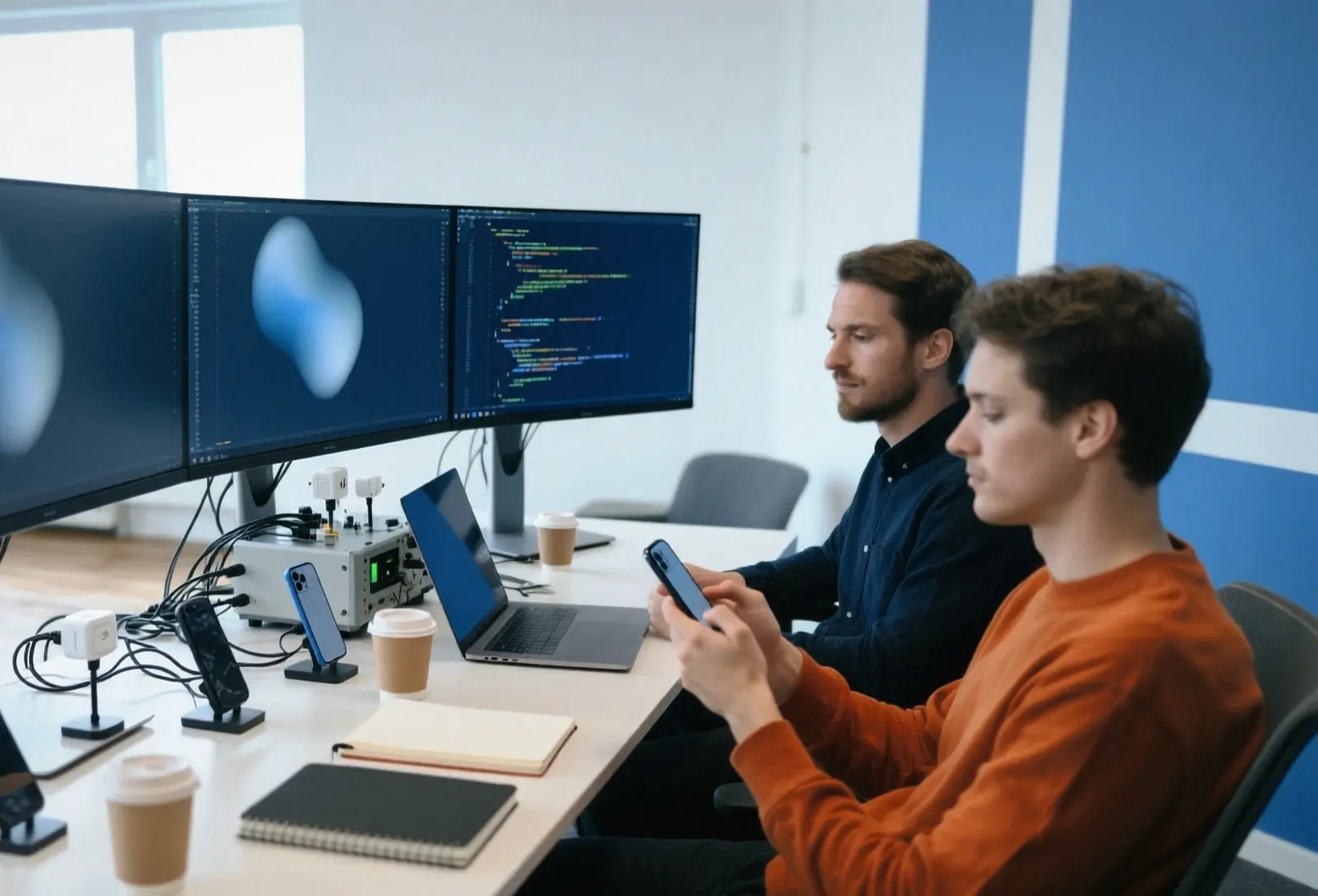
Updates, backups, security patches and small fixes under a care agreement. Best when nobody on your team wants the job.

Your team looks after it

We hand over with documentation and a walk-through. Best when you have a developer or a trusted agency.

Shared

We handle technical updates. You handle content. Best for marketing teams that publish often.

FAQ

Questions buyers ask first.

How long does a website project take?
It depends on page templates, integrations and how quickly content and approvals arrive. A small marketing site and a customer portal are very different projects. Every Telezer proposal includes a milestone schedule tied to the six gates, plus the dates by which we need your content and decisions.
Should we use a content management system or a custom build?
Use an established content management system when several people edit content and need previews and approvals. Choose custom code when the logic is unusual, such as pricing rules or logins with permissions. We compare the cost of upkeep as well as the cost of launch, then explain the trade-off in writing.
Do we need a headless CMS?
A headless CMS stores content separately from the pages and delivers it through an API, so one source can feed a website and an app. It adds a second system to maintain. We recommend it when content must reach several channels, and we do not choose it by default.
Will a redesign hurt our search rankings?
It can, mainly through changed addresses, dropped content and slow pages. We list every address, redirect in one step, keep titles and pages that perform, and verify before and after launch. Rankings can move for a few weeks even in careful migrations, so we monitor and fix.
Will the site work for people who use screen readers?
We build for keyboard use, clear headings and labeled forms, and we test with a screen reader before launch. Tell us which standard you need, usually WCAG 2.2 level AA, so it becomes a written acceptance criterion instead of a hope. Some legal requirements vary by country, so confirm yours with counsel.
Can the site connect to our CRM or contact center?
In most cases, yes. Forms and portals can write to your CRM, and Telezer also sets up contact center software and lead follow-up, so web inquiries can reach people who answer them. Tell us which CRM you use, and we will confirm the approach and any limits before you commit.
Where is Telezer based, and how do we start with Web Development?
Telezer Technologies (Telezer IT Solutions Private Limited, founded in 2017) is headquartered in Hyderabad, India, and serves businesses across the US, India and the UAE, with a team that keeps US hours. To start, call (+1) 888 465 5577, email info@telezer.com or use the form on this page, Monday to Saturday, 10:00 AM to 7:00 PM IST or 8:00 AM to 6:00 PM ET. Each program is scoped and quoted in writing.
Related services

Often combined with this service.

Technology and Growth

Digital Marketing

SEO, content, email and paid campaigns, connected to the team that follows up the leads.
Technology and Growth

Mobile App Development

iOS and Android apps, designed, built, tested and published to the stores.
Technology and Growth

Software Design and Testing

Architecture, custom builds and independent testing, so releases ship with fewer surprises.

Your next step

Get a build estimate.

Share your current site or your goals. We will return a scope, a schedule for the six gates and the redirects needed to protect your rankings.

Prefer to scope it first? Plan your team

Talk to a consultant

We reply to this address.
Include your country code, for example +1, +44, +91 or +971.
A few lines is enough: your channels, team size or project.

By sending this form you agree that we may contact you about your request. See our Privacy Policy.

Thanks, we have your request.

A consultant will reply to you as soon as we can. If it is urgent, call (+1) 888 465 5577. Hours: Monday to Saturday, 10AM to 7PM IST or 8AM to 6PM ET.

info@telezer.com   (+1) 888 465 5577

Request ready, not sent yet.

This preview is not connected to our inbox, so nothing has been delivered. To reach a consultant now, email info@telezer.com or call (+1) 888 465 5577. Hours: Monday to Saturday, 10AM to 7PM IST or 8AM to 6PM ET.

info@telezer.com   (+1) 888 465 5577

Arrows to moveEnter to openEsc to close